The wheelchair evolution is a cherished page in the books of medical equipment. From wheelbarrow to wheelchair, to almost on the verge of simulating life-like movements of a physically fit person in a physically challenged person, wheelchairs have rolled a long way since their inception.

Before we look at the impacts of these evolutions on society as a whole and the ‘disabled’ individuals who are at the root of every progress effort made in this direction, let me skim you through the timeline of the wheelchair evolution:
- 1655 – Disabled German watchmaker Stephan Farfler makes a three-wheeled chair that he could propel by use of a rotary handle on the front wheel
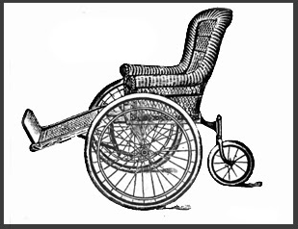
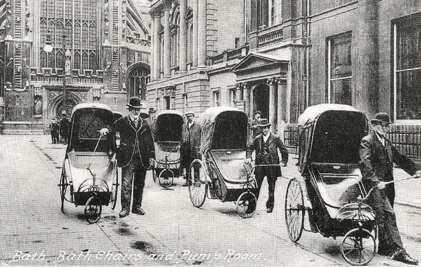
- 1750s – English inventor James Heath introduced the bath chair, intended for use by ladies and invalids. The bath chair was a popular means of transport for injured, sick, or disabled persons and as a rickshaw-like mode of transport for the wealthy
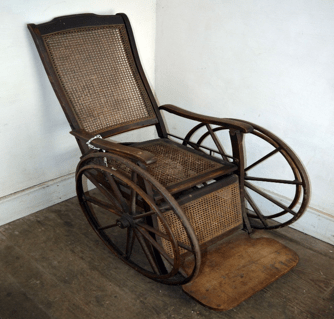
- 1850s – Wheelchairs with wooden frames and seats and backs made of cane were introduced. They were used widely in the United States by veterans of the Civil War. In the late 19th century, other modifications, such as wire-spoke wheels and rubber tires, were introduced
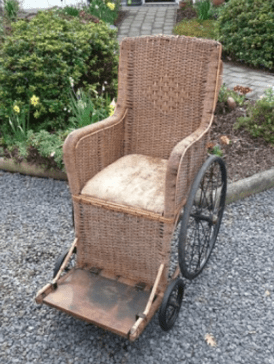
- 1880s – The original invention of the lightweight wheelchair by adding more rims and large wheels at the back. The Indian reed used in its making also made it more comfortable to sit on
- 1930s – Harry Jennings and his disabled friend Herbert Everest, both mechanical engineers, invent the first lightweight, steel, foldable wheelchair in 1933 after Everest had broken his back in a mining accident. The Everest and Jennings Wheelchair was one of the most pivotal advances in wheelchair technology. The modern standard wheelchair design is based on this
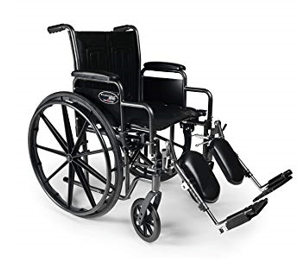
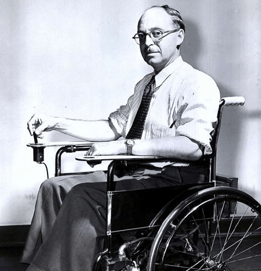
- 1950s – The first electric wheelchair (also called as Klein Drive Chair) which was invented by Canadian inventor George Klein and his team in 1953. His invention included basic features that still used in today’s designs. World War II was one of the biggest reasons for the high demand of this chair. No need to imagine why
- 1979 – A hang gliding accident left Marilyn Hamilton paralyzed. Determined to regain her previous lifestyle, she persisted with two friends to create a lightweight and highly manoeuvrable wheelchair. She proceeded on to start the Quickie wheelchair company in 1979
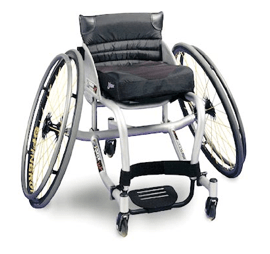
And the list goes on. There have been revolutionary advances in power wheelchairs since the last 40 years. Standing wheelchair, paediatric wheelchair are two more examples. Today’s wheelchairs and powerchairs allow more freedom of movement than ever before. They can be built with tractor-treads and multiple wheel configurations for navigating outdoor terrain. Power advances have added miles of range to electric wheelchairs and powerchairs.
EFFECTS OF THE EVOLUTION
Entwined with any action are its reactions. The consequences these groundbreaking shifts in technology have brought about are a delight to know:
- Health benefits
Wheelchairs today allow the user to achieve different positions, including tilt, recline, and, more recently, passive standing. The beneficial effects of passive standing have been documented by comprehensive scientific studies. These include reduction of seating pressure, decreased bone demineralization, increased bladder pressure, enhanced orthostatic circulatory regulation, reduction in muscular tone, decrease in upper extremity muscle stress, and enhanced functional status in general.
Other benefits include reduction in skeletal deformities and increased manoeuvrability. Physically challenged individuals are now able to live much fuller lives, performing in society as contributing citizens.
- Societal benefits
The societal undercurrents have transformed completely for the physically challenged as a direct effect of the technological advances in wheelchair designs. Earlier, people in wheelchairs were confined to homes. Today, it has become feasible for wheelchair-bound individuals to stroll in a park, visit a mall or even work in a corporate environment. Developed countries especially make it a point to embed these considerations in their infrastructural designs. This trend is yet to pick up in developing and under-developed countries.
Wheelchair-bound individuals have scripted success stories throughout the recent years. They engage in competitive sport, are involved in freestyle, adventure sports, and are even academicians, like the late Stephen Hawking. We see many a competition designed specifically for such people, such as bodybuilding competitions, or tennis and wheelchair skating.
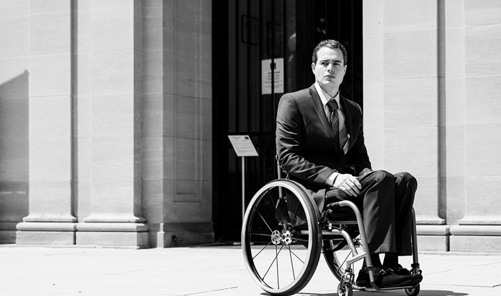
Finally, the societal view towards people with disabilities that confine them in a wheelchair has changed drastically. Society now is providing them the means to live a different and parallel instead of a lesser life. This trend, while not yet fully developed, is showing promising signs of growing. Caring technological innovations and developments such as these have enabled people even with conditions like cerebral palsy to function as citizens and members of their family.
BUT STILL MORE TO DO
Tyres, wheels, casters, axles, armrests, legrests, technology. Much of what we pondered in this article applies to many countries, but not India. Even though the general attitude is helpfulness, grounded action in terms of bringing our challenged brethren on par is lacking severely. As one activist Stella Young pointed out, no amount of smiling at a flight of stairs has ever made it turn into a ramp. You’ve got to build the ramp for the ramp to exist and be used. Access and inclusion are two core issues that are still prevalent in today’s society, and much needs to be done on this subject.
BUT HEY, THERE’S HOPE!
This scenario is being actively tackled by Indian companies now. With the government supporting the healthcare industry, online B2B platforms are roping in international manufacturers to make best-in-class medical equipment available in India. Inventions like IIT Madras’ ‘Arise’ which provide cost-effective solutions for the diff-abled are taking place real-time.
Latest one-time investment wheelchairs, like the Karma Morgan Kiss Wheelchair, which is a high-performance custom-seating mid-wheel drive power base machine, are providing the ideal solutions to function at home or at work.
When an equipment is a part of you, you needn’t look at the cost of it. Rather, you look at whether it is able to fully provide for your needs. And needs and ambitions shouldn’t be confined by features.
Slowly but surely, transformations will continue to take place in the wheelchair industry as technology improves, and hopefully a day comes when medical science is so advanced it generates the ability to make such people walk. We all await that day, and for right now, the wheelchair story is going to keep rolling forward.
 HealthcareSolutions